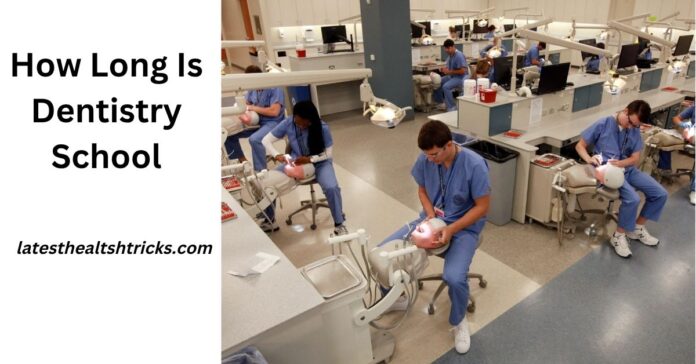
If you are thinking about becoming a dentist, one of the first questions you may ask is: how long is dentistry school?
Dentistry is one of the most respected healthcare professions in the United States and around the world. Dentists help people maintain healthy teeth, improve their smiles, and prevent serious oral health problems. While the career offers excellent income potential, job stability, and personal satisfaction, it also requires years of education and training.
The answer to how long is dentistry school is not always simple. The total time depends on the country where you study, your educational path, and whether you choose a dental specialty after graduation.
In most cases, becoming a general dentist in the United States takes about 8 years after high school. However, specialists such as orthodontists, oral surgeons, and prosthodontists may spend 10 to 14 years or more in education and training.
This comprehensive guide explains everything you need to know about how long dentistry school takes in the USA, Canada, and the UK. We will also discuss cosmetic dentistry training, specialty programs, licensing requirements, costs, and factors that may affect your educational timeline.
What Is Dentistry School?
Dentistry school is a professional graduate-level program that trains students to diagnose, prevent, and treat diseases and conditions affecting the teeth, gums, mouth, and jaw.
Dental schools combine classroom education, laboratory training, and hands-on clinical experience. Students learn subjects such as:
- Human anatomy
- Oral pathology
- Dental radiology
- Pharmacology
- Dental materials
- Periodontology
- Orthodontics
- Prosthodontics
- Pediatric dentistry
- Oral surgery
After completing dental school, graduates earn either:
- Doctor of Dental Surgery (DDS)
- Doctor of Dental Medicine (DMD)
Both degrees are considered equal in the United States and allow graduates to become licensed dentists.
How Long Is Dentistry School in the USA?
The most common answer to how long is dentistry school in USA is four years of dental school after earning a bachelor’s degree.
The typical educational pathway looks like this:
Step 1: Complete High School (4 Years)
Students should focus on science and mathematics courses such as:
- Biology
- Chemistry
- Physics
- Algebra
Strong grades can help prepare for college admission and future dental school requirements.
Step 2: Earn a Bachelor’s Degree (4 Years)
Most dental schools require applicants to complete a bachelor’s degree before admission.
Popular majors include:
- Biology
- Chemistry
- Biochemistry
- Health Sciences
- Biomedical Sciences
Although dental schools do not always require a specific major, students must complete prerequisite science courses.
Step 3: Take the Dental Admission Test (DAT)
During college, students usually take the DAT.
The exam evaluates:
- Biology knowledge
- Chemistry knowledge
- Reading comprehension
- Quantitative reasoning
- Perceptual ability
A strong DAT score improves admission chances.
Step 4: Attend Dental School (4 Years)
Dental school generally lasts four years.
First Two Years
Students focus mainly on classroom and laboratory education.
Topics include:
- Anatomy
- Physiology
- Oral biology
- Dental materials
- Pharmacology
Final Two Years
Students work directly with patients under supervision.
Clinical training includes:
- Dental cleanings
- Fillings
- Crowns
- Root canals
- Oral surgery procedures
Total Time in the USA
The average timeline is:
- High School: 4 years
- Bachelor’s Degree: 4 years
- Dental School: 4 years
Total after high school: approximately 8 years
How Long Is Dentistry School in Canada?
Many students also ask how long is dentistry school in Canada.
The pathway is similar to the United States but can vary slightly between universities.
Undergraduate Education
Most Canadian dental schools require:
- At least 2 to 4 years of undergraduate study
Many accepted students complete a full bachelor’s degree.
Dental School
Dental programs typically last four years.
Students receive either:
- DDS degree
- DMD degree
Total Time in Canada
The average timeline is:
- Undergraduate Education: 3 to 4 years
- Dental School: 4 years
Total: approximately 7 to 8 years after high school
Some accelerated pathways may shorten the timeline slightly.
How Long Is Dentistry School UK?
Students frequently search for how long is dentistry school UK because the British system differs significantly from North America.
Unlike the United States and Canada, students can enter dental school directly after secondary education.
Bachelor of Dental Surgery (BDS)
Most UK dental programs lead to a Bachelor of Dental Surgery (BDS) degree.
These programs usually last:
- 5 years
Clinical Training
Students begin patient-based learning much earlier than North American students.
Training includes:
- Preventive dentistry
- Restorative dentistry
- Oral surgery
- Community dentistry
Foundation Training
After graduation, dentists complete one year of foundation training.
Total Time in the UK
The average pathway is:
- Dental School: 5 years
- Foundation Training: 1 year
Total: approximately 6 years
As a result, becoming a dentist in the UK is generally faster than in the United States.
How Long Is Cosmetic Dentistry School?
Many people wonder how long is cosmetic dentistry school.
The truth is that there is no separate dental school specifically for cosmetic dentistry.
Cosmetic dentistry is typically learned after becoming a licensed general dentist.
General Pathway
First, a person must complete:
- Undergraduate education
- Dental school
- Licensing requirements
This process usually takes 8 years in the United States.
Cosmetic Dentistry Training
After becoming licensed, dentists may pursue:
- Continuing education courses
- Cosmetic dentistry certifications
- Advanced smile design training
- Veneer placement programs
- Digital dentistry workshops
Training can take:
- A few weeks
- Several months
- Multiple years depending on expertise level
Therefore, the total timeline for cosmetic dentistry often exceeds 8 years.
How Long Does It Take to Become a Dental Specialist?
Many dentists choose to specialize after graduation.
Specialists complete additional residency training.
Orthodontist
Orthodontists straighten teeth and correct bite problems.
Education timeline:
- Bachelor’s degree: 4 years
- Dental school: 4 years
- Orthodontic residency: 2 to 3 years
Total: 10 to 11 years
Oral and Maxillofacial Surgeon
These specialists perform complex surgeries involving the mouth, jaw, and face.
Timeline:
- Bachelor’s degree: 4 years
- Dental school: 4 years
- Residency: 4 to 6 years
Total: 12 to 14 years
Pediatric Dentist
Pediatric dentists focus on children’s dental care.
Timeline:
- Bachelor’s degree: 4 years
- Dental school: 4 years
- Residency: 2 years
Total: 10 years
Endodontist
Endodontists specialize in root canal treatment.
Timeline:
- Bachelor’s degree: 4 years
- Dental school: 4 years
- Residency: 2 to 3 years
Total: 10 to 11 years
Periodontist
Periodontists treat gum disease and place dental implants.
Timeline:
- Bachelor’s degree: 4 years
- Dental school: 4 years
- Residency: 3 years
Total: 11 years
Why Does Dentistry School Take So Long?
Many students are surprised by the length of dental education.
There are several reasons.
Patient Safety
Dentists perform procedures that directly affect patient health.
Training must ensure competence and safety.
Scientific Knowledge
Modern dentistry requires understanding:
- Biology
- Chemistry
- Anatomy
- Pharmacology
- Disease management
Clinical Skills
Students need extensive hands-on experience.
They must practice procedures repeatedly before treating patients independently.
Technological Advancements
Modern dental offices use advanced technology such as:
- Digital scanners
- CAD/CAM systems
- 3D imaging
- Laser dentistry
Learning these technologies takes time.
Can You Finish Dentistry School Faster?
In some situations, yes.
Accelerated Programs
Certain universities offer combined programs.
Examples include:
- BS/DDS programs
- BS/DMD programs
These may reduce the overall timeline by one or two years.
Advanced Placement Credits
Some students enter college with credits earned in high school.
This may shorten undergraduate studies.
International Programs
Some countries offer direct-entry dental programs after secondary school.
These pathways may be shorter than the traditional US route.
However, licensing requirements must still be met before practicing in the United States.
What Is Dental School Like?
Understanding the daily experience helps students prepare for the journey ahead.
Classroom Learning
Students attend lectures covering:
- Oral anatomy
- Disease processes
- Dental techniques
Laboratory Practice
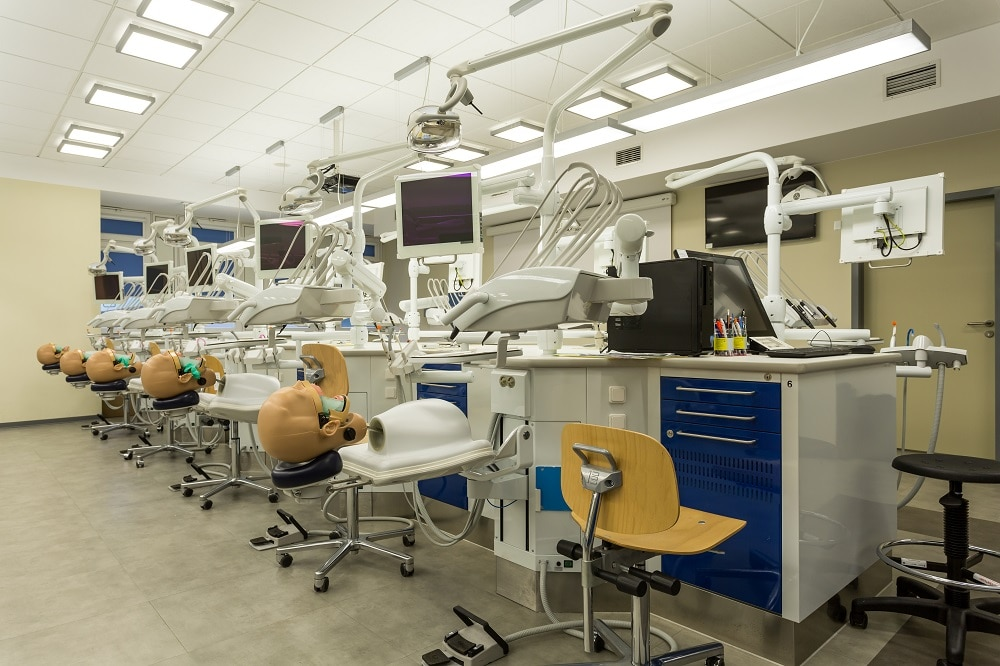
Students develop skills using simulation models before working on patients.
Clinical Rotations
Students provide supervised treatment in dental clinics.
Examinations
Frequent tests evaluate both academic and clinical performance.
The workload can be demanding but rewarding.
Is Dentistry School Hard?
Dental school is considered one of the most challenging professional programs.
Students face:
- Heavy coursework
- Clinical requirements
- Practical examinations
- Time management challenges
Success requires:
- Discipline
- Patience
- Strong study habits
- Excellent communication skills
Despite the difficulty, many graduates find the career highly rewarding.
How Much Does Dentistry School Cost?
Cost varies widely depending on location and institution.
Public Dental Schools
Average total tuition:
- $150,000 to $350,000
Private Dental Schools
Average total tuition:
- $300,000 to $600,000+
Additional expenses include:
- Books
- Instruments
- Licensing exams
- Housing
- Living costs
Students should carefully research financial aid and scholarship opportunities.
Job Outlook for Dentists
Dentistry continues to be a strong career choice.
Growing awareness of oral health, cosmetic procedures, and preventive care contributes to demand.
Benefits include:
- High earning potential
- Professional independence
- Flexible work schedules
- Long-term job stability
- Opportunity to help patients
Many dentists eventually own their own practices, creating additional financial opportunities.
Key Factors That Affect How Long Dentistry School Takes
Several factors can influence your timeline.
Educational Background
Students with previous degrees may meet prerequisites more quickly.
Specialty Choice
Specialization adds years of residency training.
Academic Performance
Course failures or delayed graduation can extend timelines.
Licensing Requirements
Different states and countries have unique licensing rules.
Part-Time Study
Some students take reduced course loads, increasing program length.
Comparison: How Long Is Dentistry School Around the World?
United States
- Bachelor’s degree: 4 years
- Dental school: 4 years
- Total: approximately 8 years
Canada
- Undergraduate studies: 3 to 4 years
- Dental school: 4 years
- Total: 7 to 8 years
United Kingdom
- Dental school: 5 years
- Foundation training: 1 year
- Total: approximately 6 years
Australia
- Direct-entry programs: 5 years
- Graduate-entry programs: 7 years
New Zealand
- Dental degree: approximately 5 years
The UK and some Commonwealth countries generally offer shorter pathways than the United States.
Is Becoming a Dentist Worth the Time Investment?
For many students, the answer is yes.
Although the educational journey is long, dentistry offers:
- Strong income potential
- Career stability
- Professional respect
- Work-life balance opportunities
- Ability to improve patient confidence and health
Dentists can positively impact lives every day through both functional and cosmetic treatments.
The years spent in training often translate into decades of rewarding professional practice.
Final Thoughts
When asking how long is dentistry school, the answer depends largely on where you study and what type of dentist you want to become.
In the United States, most students spend approximately 8 years completing undergraduate education and dental school. In Canada, the timeline is generally 7 to 8 years. In the United Kingdom, students can often become practicing dentists in about 6 years.
Those pursuing specialties such as orthodontics, pediatric dentistry, periodontics, or oral surgery should expect additional years of advanced training.
While the educational commitment is significant, dentistry remains one of the most respected and rewarding healthcare professions available today. With strong job prospects, excellent earning potential, and opportunities to improve patients’ quality of life, many aspiring dentists find the journey well worth the investment.
FAQs About How Long Is Dentistry School
Can I go directly to dental school after high school in the USA?
No. Most US dental schools require undergraduate education before admission.
Do all dentists need a residency after dental school?
No. General dentists can often begin practicing after obtaining licensure. Residencies are primarily required for specialists.
What is the shortest route to becoming a dentist?
Accelerated BS/DDS or BS/DMD programs can reduce total educational time by one to two years.
Can international dentists practice in the United States?
Yes, but they usually must complete additional accredited education and licensing requirements.
Is dental school longer than medical school?
Dental school and medical school are both typically four years after undergraduate education. However, many medical specialties require longer residency programs.
How old are most dentists when they graduate?
Most US dental students graduate between ages 26 and 30, depending on their educational path.
Can I work while attending dental school?
Some students work part-time, but the demanding schedule often limits employment opportunities.
Does cosmetic dentistry require a special degree?
No. Cosmetic dentistry is generally pursued through advanced training and continuing education after becoming a licensed dentist.
Are online dental school programs available?
Because dentistry requires extensive hands-on clinical training, fully online dental degree programs are not available.
What GPA is needed for dental school admission?
Competitive applicants often have GPAs above 3.5, although admission standards vary by institution.