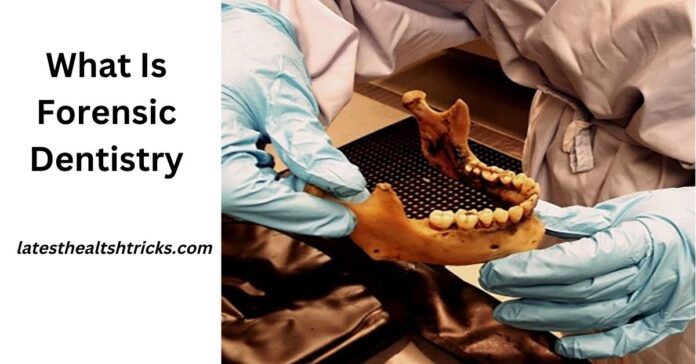
Have you ever wondered how investigators identify someone when fingerprints are missing or a face is no longer recognizable? In many cases, the answer lies in the teeth. This is where forensic dentistry becomes one of the most valuable branches of forensic science.
If you are searching for what is forensic dentistry, you are likely interested in learning how dentists help solve crimes, identify disaster victims, estimate age, and provide expert testimony in court. While many people associate dentistry with fillings, braces, and routine checkups, forensic dentistry goes far beyond traditional dental care. It combines dental science with criminal investigations, legal procedures, and human identification.
Modern forensic dentistry has become more accurate than ever thanks to digital imaging, DNA testing, artificial intelligence (AI), and electronic dental records. Law enforcement agencies, medical examiners, and disaster response teams increasingly rely on forensic dentists because teeth are among the strongest structures in the human body. They often survive fires, floods, explosions, and other severe conditions that destroy soft tissues.
This comprehensive guide explains everything you need to know about forensic dentistry in simple language. You’ll learn how it works, why it matters, the techniques experts use, and how this specialized field continues to evolve with technology.
Whether you are a student, healthcare professional, legal expert, or simply curious about forensic science, this guide will give you a complete understanding of one of the most fascinating areas of modern dentistry.
What Is Forensic Dentistry?
The simplest answer to what is forensic dentistry is that it is the branch of dentistry that applies dental knowledge to legal investigations and the identification of individuals.
Also known as forensic odontology, forensic dentistry uses dental records, teeth, jaw structures, bite patterns, saliva, and oral tissues to assist law enforcement agencies, medical examiners, coroners, and courts.
Unlike general dentistry, which focuses on preventing and treating oral diseases, forensic dentistry focuses on collecting, analyzing, interpreting, and presenting dental evidence.
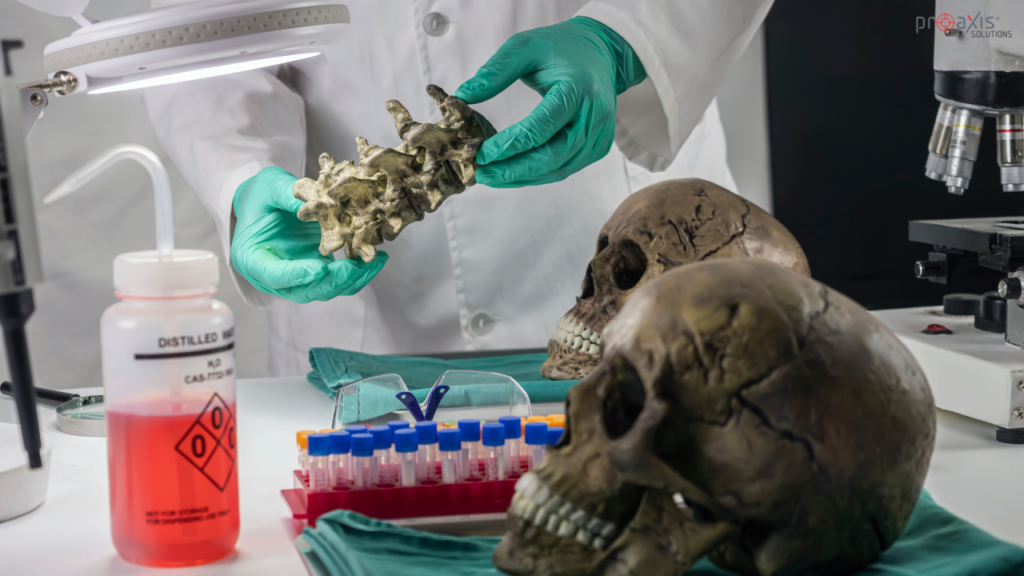
Its primary purposes include:
- Identifying unknown human remains
- Comparing dental records
- Estimating a person’s age
- Investigating bite mark evidence
- Supporting criminal investigations
- Assisting disaster victim identification
- Detecting signs of abuse or neglect
- Providing expert testimony in court
Forensic dentists often work alongside forensic pathologists, anthropologists, DNA experts, police investigators, and legal professionals.
Understanding the Science Behind Forensic Dentistry
Teeth are incredibly durable. In fact, tooth enamel is the hardest substance in the human body.
Because of this strength, teeth frequently survive situations that damage or destroy fingerprints and facial features.
Every person’s mouth is unique.
Even identical twins often have different dental treatments, fillings, crowns, root canals, tooth positions, and bite patterns. These unique characteristics create what experts call a “dental fingerprint.”
A forensic dentist compares these unique features with existing dental records to confirm an individual’s identity.
The process becomes even more reliable when dental X-rays, treatment records, photographs, implants, orthodontic work, and digital scans are available.
The History of Forensic Dentistry
The history of forensic dentistry stretches back hundreds of years.
Ancient civilizations occasionally recognized individuals through unique dental features, although scientific methods had not yet been developed.
One of the earliest documented examples occurred in 1775 when American patriot Dr. Joseph Warren was identified after the Battle of Bunker Hill through a dental appliance made by his dentist, Paul Revere.
This event demonstrated that dental work could provide reliable identification.
During the 19th century, advances in dentistry improved recordkeeping and documentation.
In the 20th century, forensic dentistry became a recognized scientific discipline.
Major events such as wars, airplane crashes, earthquakes, tsunamis, and terrorist attacks highlighted the importance of dental identification when other methods were impossible.
Today, forensic dentistry uses:
- Digital radiography
- Three-dimensional imaging
- Computer-assisted comparisons
- DNA analysis
- Artificial intelligence
- Electronic health records
These innovations continue to improve identification speed and accuracy.
Why Is Forensic Dentistry Important?
Forensic dentistry serves society in many important ways.
One of its greatest contributions is helping families receive answers after the loss of a loved one.
When victims cannot be visually identified, dental records often provide the confirmation families need.
Forensic dentistry also strengthens the justice system by supplying scientific evidence that supports criminal investigations.
Additional benefits include:
- Faster victim identification
- Improved disaster response
- Better criminal investigations
- More accurate age estimation
- Detection of abuse
- Reliable courtroom evidence
- International cooperation during mass disasters
Without forensic dentistry, many investigations would remain unsolved.
Who Uses Forensic Dentistry?
Many organizations depend on forensic dentists.
These professionals often collaborate with multiple agencies during investigations.
Common organizations include:
- Police departments
- Medical examiner offices
- Coroner offices
- Federal law enforcement agencies
- Military identification units
- Disaster response organizations
- Hospitals
- Universities
- Human rights organizations
- International forensic teams
Each organization benefits from specialized dental expertise when identification or evidence analysis is required.
What Does a Forensic Dentist Do?
A forensic dentist performs much more than dental examinations.
Their responsibilities vary depending on the investigation.
Daily duties may include:
Identifying Human Remains
This is the most common responsibility.
The forensic dentist compares dental records from missing persons with the teeth found during an investigation.
The comparison may involve:
- Fillings
- Crowns
- Bridges
- Root canal treatments
- Tooth alignment
- Missing teeth
- Dental implants
- Orthodontic appliances
- X-rays
When enough matching features exist, the identity can often be confirmed with remarkable confidence.
Analyzing Bite Marks
Although bite mark evidence has become more controversial in recent years, forensic dentists may still evaluate bite injuries under specific circumstances.
They examine:
- Shape
- Size
- Tooth spacing
- Individual tooth characteristics
- Injury patterns
Modern experts use strict scientific standards before drawing conclusions.
Estimating Age
Age estimation is valuable in many situations.
Examples include:
- Immigration cases
- Criminal investigations
- Human trafficking investigations
- Archaeological research
- Identification of unidentified remains
Teeth develop in predictable stages, allowing experts to estimate age with reasonable accuracy.
Collecting Dental Evidence
A forensic dentist carefully documents oral findings by taking:
- Photographs
- Digital scans
- Radiographs
- Measurements
- Dental impressions
- Written observations
Proper documentation preserves evidence for future analysis.
Providing Court Testimony
Many forensic dentists appear in court as expert witnesses.
They explain:
- Dental findings
- Scientific methods
- Identification procedures
- Evidence interpretation
- Professional opinions
Their testimony helps judges and juries understand complex scientific evidence.
The Main Areas of Forensic Dentistry
Forensic dentistry includes several specialized fields.
Each serves a different purpose within forensic science.
Human Identification
Human identification remains the foundation of forensic dentistry.
Experts compare postmortem dental findings with antemortem dental records.
If multiple matching characteristics exist, identification can often be confirmed even when fingerprints are unavailable.
Bite Mark Evaluation
Historically, bite mark analysis played a larger role in criminal investigations.
Today, forensic organizations recommend using bite mark evidence cautiously because scientific research has shown important limitations.
Modern forensic dentists use standardized methods and rarely rely on bite marks as the sole evidence in criminal cases.
Age Estimation
Children and teenagers experience predictable dental development.
By examining:
- Tooth eruption
- Root development
- Wisdom teeth
- Mineralization
Experts estimate chronological age.
Adults require different techniques because dental development has already finished.
Disaster Victim Identification
Mass disasters often involve dozens or hundreds of victims.
Dental identification becomes especially valuable after:
- Airplane crashes
- Earthquakes
- Hurricanes
- Floods
- Building collapses
- Wildfires
- Industrial accidents
Because dental restorations remain intact even under extreme conditions, forensic dentists help identify victims quickly.
How Dental Records Help Identify People
Dental records contain highly detailed information.
These records may include:
- Dental charts
- X-rays
- Treatment history
- Photographs
- Implant serial numbers
- Orthodontic records
- Digital scans
- Crown and bridge information
When investigators locate possible records from a missing person’s dentist, forensic experts compare every available detail.
A successful identification depends on finding multiple consistent matches.
Modern digital recordkeeping has greatly improved this process.
Why Teeth Are Better Than Many Other Identification Methods
People often ask why teeth are so valuable compared to fingerprints.
The answer lies in durability.
Teeth resist:
- High temperatures
- Water damage
- Decomposition
- Trauma
- Long-term burial
Dental restorations such as crowns, bridges, implants, and fillings can survive conditions that destroy other identifying features.
This makes forensic dentistry one of the most dependable identification methods available.
Dental Radiographs in Forensic Dentistry
Dental X-rays are among the strongest forms of forensic evidence.
Every person’s teeth, roots, bone structure, and dental treatments create a distinctive pattern.
Even small characteristics can become identifying features.
Forensic dentists compare:
- Root shapes
- Bone levels
- Sinus patterns
- Filling locations
- Crown margins
- Implant placement
- Root canal fillings
Because these structures rarely change dramatically over time, radiographs often provide highly reliable identification.
The Role of DNA in Forensic Dentistry
Although teeth alone provide valuable identification, they can also protect DNA.
The inner portion of a tooth contains dental pulp.
This tissue may preserve DNA even when the body has experienced severe environmental damage.
Scientists can sometimes recover DNA from:
- Tooth pulp
- Root tissues
- Jawbone
- Saliva
DNA testing is especially useful when dental records are unavailable.
Rather than replacing forensic dentistry, DNA analysis often works together with dental identification to increase accuracy.
How Artificial Intelligence Is Improving Forensic Dentistry
Technology is transforming forensic dentistry faster than ever before.
Artificial intelligence now assists experts by:
- Comparing dental X-rays
- Detecting matching tooth patterns
- Organizing large databases
- Identifying similar dental restorations
- Reducing human error
- Speeding investigations
AI does not replace forensic dentists.
Instead, it serves as a powerful tool that helps experts analyze evidence more efficiently while maintaining scientific oversight.
As digital dentistry continues to advance, AI is expected to play an even larger role in forensic investigations.
How Forensic Dentistry Helps During Mass Disasters
One of the most important applications of forensic dentistry is disaster victim identification (DVI). Natural disasters and large-scale accidents can make identifying victims extremely difficult. Fires, earthquakes, hurricanes, floods, explosions, building collapses, and airplane crashes may severely damage the body, making visual identification impossible.
Because teeth and many dental restorations can survive extreme conditions, forensic dentists become essential members of disaster response teams.
The disaster victim identification process usually includes several carefully organized steps:
- Recovering human remains from the disaster site
- Documenting every dental feature
- Taking dental X-rays
- Photographing the mouth and jaw
- Recording missing teeth and dental treatments
- Comparing findings with dental records provided by families or dentists
- Confirming identity using multiple matching characteristics
This process provides families with reliable answers and allows authorities to complete legal documentation accurately.
The Importance of Dental Records in Missing Person Cases
When someone disappears, investigators gather information that may help identify the individual if remains are later discovered.
Dental records are often among the most valuable pieces of evidence.
A complete dental record may include:
- Medical and dental history
- Tooth charts
- X-rays
- Photographs
- Orthodontic records
- Implant information
- Crown and bridge details
- Root canal treatments
- Tooth-colored fillings
- Digital scans
Even if several years have passed since the last dental visit, many of these features remain unchanged and can still assist with identification.
This is one reason dentists are encouraged to maintain accurate and organized patient records.
Age Estimation in Forensic Dentistry
Age estimation is another important responsibility in forensic dentistry.
Investigators may need to estimate a person’s age when no identification documents are available.
This commonly occurs in:
- Criminal investigations
- Immigration cases
- Human trafficking investigations
- Refugee identification
- Archaeological discoveries
- Historical investigations
- Disaster victim identification
Age Estimation in Children
Children’s teeth develop in predictable stages.
Experts examine:
- Baby teeth
- Permanent tooth eruption
- Root formation
- Tooth mineralization
- Wisdom tooth development
These characteristics allow relatively accurate age estimation because dental growth follows well-established biological patterns.
Age Estimation in Adults
Estimating age in adults is more challenging.
Experts evaluate several natural changes, including:
- Tooth wear
- Gum recession
- Secondary dentin formation
- Root transparency
- Bone loss
- Changes inside the dental pulp
Although adult age estimates are generally less precise than those for children, they still provide valuable information during investigations.
Child Abuse and Neglect Investigations
Forensic dentistry also plays a significant role in protecting children.
Dentists are often among the first healthcare professionals to recognize signs of abuse because many injuries occur around the head, face, neck, and mouth.
Possible warning signs include:
- Broken teeth
- Torn lips
- Bite injuries
- Jaw fractures
- Burns inside the mouth
- Repeated unexplained injuries
- Untreated dental disease caused by severe neglect
Forensic dentists carefully document these findings and may assist child protection agencies by providing objective medical evidence.
Early recognition can help protect vulnerable children from continued harm.
Bite Mark Analysis: A Modern Perspective
Bite mark analysis has received considerable attention in movies and television, but today’s scientific approach is much more cautious.
Years ago, investigators sometimes relied heavily on bite marks to identify suspects.
However, modern research has shown that skin is not an ideal surface for preserving detailed bite patterns. Skin stretches, swells, heals, and changes shape, making exact comparisons difficult.
Because of these limitations, many forensic organizations recommend that bite mark evidence should never be used as the only evidence in a criminal case.
Today, forensic dentists use bite mark analysis only under carefully controlled scientific standards and alongside other evidence such as DNA, fingerprints, surveillance footage, and witness statements.
This shift demonstrates how forensic dentistry continues to improve by following the latest scientific evidence.
The Role of Saliva in Forensic Dentistry
Saliva can provide valuable forensic evidence.
When saliva is found on:
- Bite marks
- Cigarettes
- Drinking glasses
- Food
- Clothing
- Envelopes
- Personal belongings
Investigators may recover DNA from the saliva sample.
Forensic dentists sometimes help collect and preserve these biological samples using specialized techniques that reduce contamination.
Modern DNA analysis has greatly expanded the value of saliva evidence in criminal investigations.
Dental Implants and Their Forensic Value
Dental implants have become increasingly common across the United States.
Also Read: Is Dentistry Healthcare? A Complete Guide to Understanding Dentistry’s Role in Modern Healthcare
These implants often contain unique manufacturer information that may assist forensic investigations.
Investigators may use:
- Implant design
- Implant size
- Manufacturer records
- Serial numbers
- Placement location
Combined with dental records, implants can significantly improve identification accuracy.
As implant technology advances, its forensic value continues to increase.
Technology Is Transforming Forensic Dentistry
Modern forensic dentistry looks very different from the field that existed decades ago.
Today’s experts use advanced technology to improve speed, accuracy, and documentation.
Some of the most important innovations include:
Digital Dental Records
Electronic health records make it easier to retrieve dental information quickly during investigations.
Digital files reduce paperwork while improving accuracy.
3D Imaging
Three-dimensional imaging provides detailed views of teeth, jaws, and facial bones.
These images allow investigators to examine structures from multiple angles.
Cone Beam CT (CBCT)
CBCT scans create highly detailed images of dental anatomy.
These scans improve comparisons between antemortem and postmortem findings.
Artificial Intelligence
AI systems can assist by:
- Comparing thousands of dental images
- Detecting similar restorations
- Organizing databases
- Reducing comparison time
- Supporting expert decision-making
Human expertise remains essential, but AI continues to improve efficiency.
Digital Photography
High-resolution photographs preserve evidence with exceptional detail.
Proper documentation supports future analysis and courtroom presentation.
How Forensic Dentists Work With Other Experts
Forensic dentistry rarely operates alone.
Most investigations involve collaboration among multiple specialists.
A forensic team may include:
- Forensic pathologists
- Medical examiners
- Coroners
- Crime scene investigators
- DNA analysts
- Forensic anthropologists
- Law enforcement officers
- Prosecutors
- Emergency response teams
Each professional contributes unique expertise that strengthens the overall investigation.
This multidisciplinary approach increases both accuracy and reliability.
Legal and Ethical Responsibilities
Because forensic dentists work within the legal system, they must follow strict professional standards.
Their responsibilities include:
- Remaining objective
- Avoiding bias
- Preserving evidence
- Maintaining confidentiality
- Using scientifically accepted methods
- Clearly documenting findings
- Explaining limitations
- Providing honest testimony
Their role is not to prove guilt or innocence.
Instead, they provide unbiased scientific opinions based on available evidence.
Advantages of Forensic Dentistry
Forensic dentistry offers many important benefits.
These include:
- Highly reliable identification
- Teeth survive extreme conditions
- Fast comparison with dental records
- Valuable support during disasters
- Useful age estimation
- Assistance in abuse investigations
- Strong scientific documentation
- Effective collaboration with DNA analysis
- Improved criminal investigations
These advantages explain why forensic dentistry remains an essential part of modern forensic science.
Limitations of Forensic Dentistry
Despite its strengths, forensic dentistry also has limitations.
These include:
- Missing dental records
- Poor-quality X-rays
- Limited dental treatment history
- Severe jaw destruction
- Changes after long periods of decomposition
- Difficulty estimating adult age precisely
- Limited reliability of bite mark evidence
Recognizing these limitations helps ensure investigations remain scientifically accurate and fair.
How to Become a Forensic Dentist
Many students become interested in forensic dentistry after learning how dentists help solve crimes.
The career generally follows these steps:
- Complete undergraduate education.
- Earn a dental degree.
- Obtain a dental license.
- Gain clinical experience.
- Complete forensic dentistry training or continuing education.
- Join professional forensic organizations.
- Participate in forensic casework and disaster response training.
Because this field combines dentistry, law, medicine, and science, lifelong learning is essential.
Career Opportunities in Forensic Dentistry
Qualified forensic dentists may work in many settings, including:
- Medical examiner offices
- Universities
- Dental schools
- Law enforcement agencies
- Military organizations
- Government laboratories
- Disaster response teams
- Private consulting
- International humanitarian organizations
Many professionals combine clinical dentistry with forensic consulting rather than working exclusively in forensic cases.
The Future of Forensic Dentistry
The future of forensic dentistry is exciting.
Several emerging technologies are expected to improve investigations even further.
Future developments may include:
- More advanced AI-assisted dental identification
- Improved facial reconstruction technology
- Better digital record sharing
- Faster DNA extraction methods
- Cloud-based forensic databases
- Enhanced 3D printing for dental comparisons
- Machine learning-assisted age estimation
- International digital identification systems
As these innovations continue to develop, forensic dentistry will become even more accurate and efficient.
Expert Insights: Why Forensic Dentistry Continues to Grow
One of the biggest changes in forensic dentistry over the past decade is the emphasis on evidence-based science.
Experts now place greater importance on research, standardized procedures, and quality assurance than ever before. This improves the credibility of forensic evidence and helps ensure that investigations remain fair and accurate.
Another major trend is the growing partnership between digital dentistry and forensic science. Digital impressions, electronic records, and AI-assisted analysis are making the identification process faster while reducing the possibility of human error.
The future of forensic dentistry is not about replacing experts with technology. Instead, technology provides powerful tools that allow forensic dentists to make better-informed decisions while maintaining professional judgment.
Frequently Asked Questions About What Is Forensic Dentistry
Is forensic dentistry the same as forensic odontology?
Yes. The terms forensic dentistry and forensic odontology refer to the same specialized field.
Can teeth really identify a person?
Yes. Dental records often provide highly reliable identification because every person’s teeth and dental treatments are unique.
Do forensic dentists solve crimes?
They assist criminal investigations by analyzing dental evidence, but they work as scientific experts rather than detectives.
How accurate is forensic dentistry?
When complete dental records are available, forensic dentistry can be extremely accurate for human identification.
Can forensic dentists estimate someone’s age?
Yes. They can estimate age by examining tooth development, wear patterns, and other dental characteristics.
Do forensic dentists work after natural disasters?
Yes. They are essential members of disaster victim identification teams.
Can baby teeth be used for identification?
Yes. Baby teeth can provide useful information, especially when combined with dental records and other forensic evidence.
Are dental implants useful in forensic investigations?
Yes. Dental implants often contain unique identifying information that helps forensic experts confirm identity.
Can forensic dentistry help identify historical remains?
Yes. Archaeologists and forensic experts sometimes use dental analysis to study historical and ancient human remains.
How long are dental records usually kept?
The exact retention period varies by state and dental practice policies, but many dental offices keep records for several years because they may become important in future legal or identification cases.
Conclusion
Understanding what is forensic dentistry reveals just how valuable dental science has become beyond the dental office. It is a specialized field that combines dentistry, forensic science, medicine, and law to answer some of society’s most difficult questions. Whether identifying disaster victims, helping investigators solve crimes, estimating age, or protecting vulnerable children, forensic dentists provide scientific expertise that serves both justice and public safety.
Modern forensic dentistry has evolved significantly with the introduction of digital imaging, artificial intelligence, DNA technology, and electronic dental records. These advances have improved the speed and accuracy of investigations while strengthening the reliability of forensic evidence.
At the same time, the field continues to embrace evidence-based practices, acknowledging both its strengths and limitations. This commitment to scientific integrity ensures that forensic dentistry remains a trusted resource for law enforcement, healthcare professionals, and the legal system.
As technology continues to advance, forensic dentistry will play an even greater role in identifying individuals, supporting criminal investigations, responding to disasters, and delivering answers to families seeking closure. Its unique combination of dental expertise and forensic science makes it one of the most important and respected specialties in modern healthcare and criminal justice.