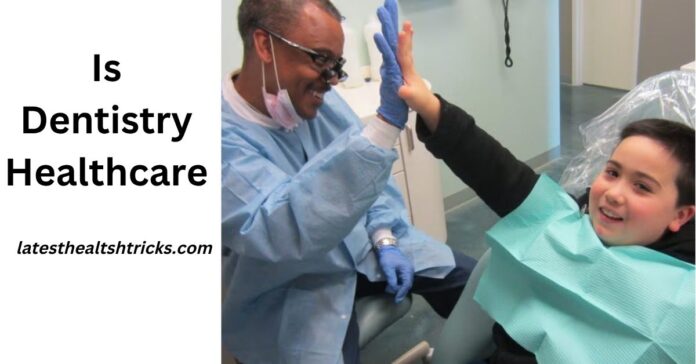
Many people ask the question: is dentistry healthcare? It may seem like a simple question, but the answer is more important than most people realize. Dentistry affects much more than your teeth. Oral health is closely connected to overall health, quality of life, disease prevention, and even life expectancy.
For decades, healthcare systems around the world treated dental care separately from medical care. However, modern research continues to show strong links between oral health and conditions such as heart disease, diabetes, respiratory illnesses, pregnancy complications, and cognitive decline. As a result, healthcare experts increasingly recognize dentistry as an essential component of comprehensive healthcare.
In this detailed guide, we will answer the question “is dentistry healthcare” from multiple perspectives. We will examine the role of dentists, the connection between oral and overall health, healthcare policies, insurance systems, and countries in which dentistry is part of national healthcare. We will also explore why dentistry matters more today than ever before.
By the end of this article, you will have a complete understanding of whether dentistry belongs within healthcare and why oral health deserves the same attention as other medical services.
What Is Dentistry?
Dentistry is a branch of healthcare that focuses on the diagnosis, prevention, treatment, and management of diseases and conditions affecting the mouth, teeth, gums, jaw, and related structures.
Dentists are highly trained healthcare professionals who complete years of education and clinical training before they can practice.
The field of dentistry includes:
- Preventive dental care
- General dentistry
- Cosmetic dentistry
- Orthodontics
- Pediatric dentistry
- Oral surgery
- Periodontics
- Prosthodontics
- Endodontics
- Public health dentistry
The primary goal of dentistry is to maintain oral health while helping patients prevent and manage diseases that can affect both the mouth and the rest of the body.
Is Dentistry Healthcare?
Yes, dentistry is healthcare.
Healthcare includes services that prevent, diagnose, treat, and manage diseases while promoting overall health and well-being. Dentistry fulfills all of these functions.
Dentists diagnose diseases, perform treatments, prescribe medications, conduct screenings, prevent illnesses, and educate patients about healthy behaviors. These responsibilities align directly with the broader definition of healthcare.
Modern healthcare organizations, medical researchers, public health agencies, and healthcare policymakers widely recognize dentistry as an important healthcare profession.
The confusion often comes from the fact that dental insurance and medical insurance are usually separate in the United States. This separation can create the impression that dental care is different from healthcare. However, the separation is largely administrative and financial rather than scientific or clinical.
From a health perspective, dentistry is unquestionably healthcare.
Why Dentistry Is Considered Healthcare
Disease Prevention
A major function of healthcare is preventing disease before it becomes severe.
Dentists help prevent:
- Tooth decay
- Gum disease
- Oral infections
- Tooth loss
- Oral cancer
- Jaw disorders
Preventive care includes regular examinations, cleanings, fluoride treatments, dental sealants, and patient education.
By preventing disease, dentists reduce future health complications and healthcare costs.
Disease Diagnosis
Dentists do more than treat teeth.
During routine examinations, they can identify:
- Oral cancer
- Diabetes symptoms
- Vitamin deficiencies
- Autoimmune disorders
- Bone loss
- Sleep apnea indicators
- Signs of cardiovascular disease
Early detection is one of healthcare’s most important goals, making dentistry an essential healthcare service.
Medical Treatment
Dentists provide treatments that directly improve health and function.
Examples include:
- Filling cavities
- Treating infections
- Performing root canals
- Managing gum disease
- Replacing missing teeth
- Correcting bite problems
These procedures restore normal function, reduce pain, and prevent serious health complications.
Emergency Care
Dental emergencies are genuine healthcare emergencies.
Examples include:
- Severe tooth infections
- Facial swelling
- Dental trauma
- Broken jaw injuries
- Uncontrolled oral bleeding
Without timely treatment, some dental emergencies can become life-threatening.
Is Dentistry Part of Healthcare?
A common question is: is dentistry part of healthcare?
The answer is yes.
Oral health is an important component of overall health. The mouth serves as an entry point to the digestive and respiratory systems. Problems that develop in the mouth can affect the entire body.
Healthcare is not limited to hospitals and physicians. It includes all professionals who contribute to preventing illness and improving health outcomes.
Dentists work alongside:
- Physicians
- Surgeons
- Nurses
- Pharmacists
- Physical therapists
- Public health professionals
Together, they form part of the broader healthcare system.
Therefore, dentistry is part of healthcare because it contributes directly to disease prevention, treatment, and health promotion.
Is Dentistry Considered Healthcare by Health Organizations?
Yes.
Major health organizations recognize dentistry as healthcare.
Examples include:
- American Dental Association (ADA)
- Centers for Disease Control and Prevention (CDC)
- World Health Organization (WHO)
- National Institutes of Health (NIH)
- American Medical Association (AMA)
These organizations consistently emphasize that oral health is an essential component of overall health.
The World Health Organization specifically states that oral health is a key indicator of overall health, well-being, and quality of life.
The Connection Between Oral Health and Overall Health
One of the strongest arguments supporting the idea that dentistry is healthcare is the close relationship between oral health and systemic health.
Research has shown connections between oral diseases and many serious medical conditions.
Heart Disease
Studies suggest that chronic gum disease may increase inflammation throughout the body.
Inflammation can contribute to:
- Coronary artery disease
- Heart attacks
- Stroke
Although researchers continue studying the exact relationship, maintaining healthy gums appears beneficial for cardiovascular health.
Diabetes
The relationship between diabetes and gum disease works both ways.
People with diabetes are more likely to develop gum disease.
At the same time, severe gum disease can make blood sugar levels harder to control.
Dentists and physicians often work together to manage diabetic patients.
Pregnancy Complications
Poor oral health has been linked to:
- Premature birth
- Low birth weight
- Pregnancy-related complications
Dental care is increasingly viewed as an important part of prenatal healthcare.
Respiratory Diseases
Bacteria from oral infections can enter the respiratory system.
This may contribute to:
- Pneumonia
- Respiratory infections
- Chronic lung conditions
Good oral hygiene can help reduce these risks.
Cognitive Health
Researchers are investigating possible links between gum disease and cognitive decline.
While more research is needed, evidence suggests oral health may influence brain health over time.
Why Oral Health Is Often Treated Separately in the United States
Many Americans wonder why dentistry appears separate from healthcare if it is clearly a healthcare profession.
Several historical factors explain this situation.
Separate Insurance Systems
Dental insurance evolved differently from medical insurance.
As a result:
- Different coverage rules developed
- Different reimbursement systems emerged
- Separate provider networks were created
This administrative separation continues today.
Historical Development
During the 19th century, dentistry became its own professional discipline with specialized education and licensing systems.
Although dentists remained healthcare providers, they operated through separate professional organizations.
Cost Management
Employers and insurers often created separate dental plans to manage costs and benefits independently from medical coverage.
This practice reinforced the perception that dental care was different from healthcare.
Despite these differences, healthcare experts increasingly advocate for better integration of dental and medical services.
Is Dentistry in Healthcare Education?
Another frequently asked question is: is dentistry in healthcare education?
Absolutely.
Dental schools are healthcare institutions.
Dental students study:
- Human anatomy
- Physiology
- Pathology
- Pharmacology
- Microbiology
- Radiology
- Disease diagnosis
- Patient care
Many foundational subjects overlap with medical education.
Dentists must understand how the entire body functions because oral health is interconnected with systemic health.
The Growing Integration of Dental and Medical Care
Healthcare systems are increasingly integrating dentistry with traditional medical care.
Several trends are driving this change.
Shared Patient Records
More healthcare systems use integrated electronic health records.
This allows dentists and physicians to:
- Share information
- Coordinate treatment
- Improve patient outcomes
Medical-Dental Collaboration
Healthcare providers now collaborate more frequently when treating:
- Diabetes
- Cancer
- Cardiovascular disease
- Autoimmune disorders
This teamwork improves patient care.
Preventive Health Models
Modern healthcare focuses heavily on prevention.
Because dentists regularly see patients for routine checkups, they play an important role in identifying health problems early.
The Economic Importance of Dentistry in Healthcare
Dental care contributes significantly to healthcare systems and national economies.
Benefits include:
- Reduced emergency room visits
- Lower healthcare costs
- Improved workforce productivity
- Better quality of life
- Fewer chronic disease complications
When oral diseases are ignored, healthcare expenses often increase dramatically.
Investing in preventive dentistry can save substantial healthcare resources over time.
Countries in Which Dentistry Is Part of National Healthcare
Many people search for information about countries in which dentistry is part of national healthcare.
The answer varies because healthcare systems differ around the world.
ALso Read: What Is Prophylaxis in Dentistry? A Complete Guide to Preventive Dental Cleaning
United Kingdom
The United Kingdom includes dental services through the National Health Service (NHS).
Patients may receive subsidized dental care, although costs vary depending on treatment needs.
Canada
Canada’s healthcare system traditionally focused on medical services, but recent government programs have expanded public dental coverage for eligible populations.
Australia
Australia provides public dental services for certain groups, including children and lower-income individuals.
Private dental insurance remains common.
Sweden
Sweden offers extensive public dental support, especially for children and young adults.
Norway
Norway provides public dental coverage for selected populations, including children.
Denmark
Dental care is partially subsidized through public healthcare programs.
Finland
Finland integrates dental care into municipal healthcare systems.
Germany
Germany includes many dental services within its national health insurance framework.
France
France provides dental coverage through its public health insurance system, often supplemented by private insurance.
Netherlands
Dental care is partially integrated into the national healthcare system, particularly for children.
As healthcare systems evolve, more countries are recognizing oral health as an essential component of public health.
Public Health and Dentistry
Public health experts increasingly view oral health as a major healthcare priority.
Common public health dental initiatives include:
- Water fluoridation
- School dental programs
- Oral cancer screenings
- Community health education
- Preventive care campaigns
These programs aim to improve population health and reduce healthcare disparities.
The Impact of Poor Oral Health
Failing to prioritize dental care can lead to serious consequences.
Physical Consequences
Poor oral health may result in:
- Chronic pain
- Infection
- Tooth loss
- Difficulty eating
- Speech problems
Emotional Consequences
Dental problems can affect:
- Self-confidence
- Social interactions
- Mental health
Financial Consequences
Delayed dental treatment often becomes more expensive over time.
Preventive care is usually far more affordable than extensive restorative treatment.
Future Trends in Dentistry and Healthcare
The future of healthcare will likely include stronger integration between dentistry and medicine.
Emerging trends include:
Artificial Intelligence
AI tools can assist dentists in:
- Detecting cavities
- Identifying oral cancer
- Analyzing radiographs
Telehealth Dentistry
Virtual consultations improve access to care, especially in rural areas.
Personalized Treatment
Advances in genetics and data analysis allow more personalized oral healthcare strategies.
Integrated Healthcare Models
Healthcare systems increasingly recognize that separating oral health from overall health may limit patient outcomes.
Future healthcare models are expected to promote greater collaboration between dentists and physicians.
Common Misconceptions About Dentistry
Dentistry Is Only About Teeth
This is false.
Dentists evaluate the health of:
- Gums
- Bones
- Jaw joints
- Oral tissues
- Salivary glands
They also identify signs of systemic disease.
Dental Problems Are Not Serious
Untreated oral infections can spread throughout the body and become dangerous.
Medical Checkups Replace Dental Visits
Medical doctors and dentists have different areas of expertise.
Patients need both medical and dental care for complete health management.
Cosmetic Dentistry Is the Same as General Dentistry
While cosmetic dentistry focuses on appearance, many dental services directly support health, function, and disease prevention.
Final Verdict: Is Dentistry Healthcare?
The answer is clear: yes, dentistry is healthcare.
Dentists diagnose diseases, prevent illness, provide medical treatment, manage emergencies, and improve overall well-being. Scientific evidence consistently shows that oral health is closely connected to physical health throughout the body.
Whether asking “is dentistry healthcare,” “is dentistry in healthcare,” “is dentistry part of healthcare,” or “is dentistry considered healthcare,” the conclusion remains the same.
Dentistry plays a vital role in maintaining health, preventing disease, and improving quality of life. As healthcare systems continue evolving, dentistry is becoming increasingly integrated into comprehensive healthcare models around the world.
Understanding this connection helps individuals make informed decisions about their health and reinforces the importance of regular dental care as part of a healthy lifestyle.
Frequently Asked Questions (FAQs)
Why is dentistry separated from medical insurance in the United States?
The separation developed historically because dental insurance evolved independently from medical insurance. Despite this administrative difference, dentistry remains a healthcare profession.
Can dentists detect diseases outside the mouth?
Yes. Dentists may identify signs of diabetes, oral cancer, nutritional deficiencies, autoimmune conditions, and other health issues during examinations.
Is oral health important for children’s overall development?
Yes. Healthy teeth and gums support proper nutrition, speech development, learning, and overall growth in children.
Are dentists considered healthcare providers by the government?
Yes. Federal agencies, state governments, and healthcare organizations classify dentists as licensed healthcare professionals.
Can poor oral health affect job opportunities?
Yes. Missing teeth, chronic bad breath, and visible dental problems can influence confidence, communication, and professional interactions.
Why do healthcare experts emphasize preventive dentistry?
Preventive dental care reduces disease risk, lowers treatment costs, improves quality of life, and supports better overall health outcomes.
Will dentistry become more integrated with healthcare in the future?
Most healthcare experts believe integration will continue to increase due to growing evidence linking oral health with systemic health.
Does Medicare cover routine dental care?
Traditional Medicare generally offers limited dental coverage. However, some Medicare Advantage plans may include dental benefits.
How often should adults visit a dentist?
Most adults benefit from dental checkups every six months, although some individuals may require more frequent visits based on their oral health needs.
What is the biggest reason dentistry is considered healthcare?
The biggest reason is that oral health directly affects overall physical health, disease prevention, diagnosis, treatment outcomes, and quality of life.