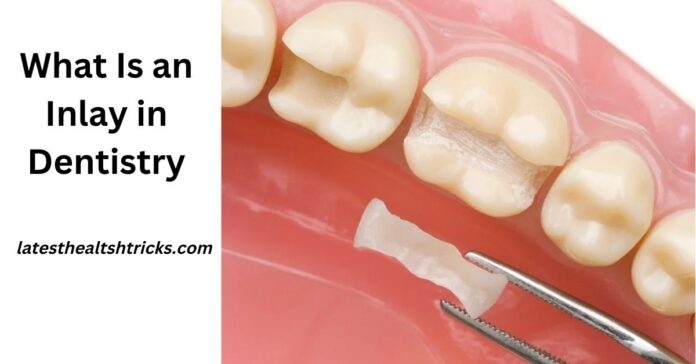
If your dentist has recommended an inlay, you may be wondering, what is an inlay in dentistry and why might you need one?
Dental restorations have improved significantly over the years. Today, patients have more options than ever for repairing damaged teeth while maintaining a natural appearance and long-lasting strength. Among these options, dental inlays have become a popular solution for treating moderate tooth damage that is too extensive for a regular filling but does not require a full dental crown.
Understanding what is an inlay in dentistry can help you make informed decisions about your oral health. Inlays offer a durable, attractive, and conservative treatment that preserves more of your natural tooth structure compared to traditional crowns.
In this comprehensive guide, you’ll learn everything about dental inlays, including how they work, when they are used, their benefits, costs, materials, procedures, recovery, and how they compare to other dental restorations. We will also explain what is an inlay and onlay in dentistry and answer the most common patient questions.
What Is an Inlay in Dentistry?
To answer the question “what is an inlay in dentistry,” an inlay is a custom-made dental restoration designed to repair damage within the grooves and chewing surface of a tooth.
Unlike a traditional filling that is molded directly inside the tooth during a dental visit, an inlay is created outside the mouth in a dental laboratory or through digital CAD/CAM technology and then bonded securely to the damaged tooth.
An inlay fits precisely inside the cusps, which are the raised points on the chewing surface of a tooth. Because of this precise fit, inlays provide exceptional strength and durability.
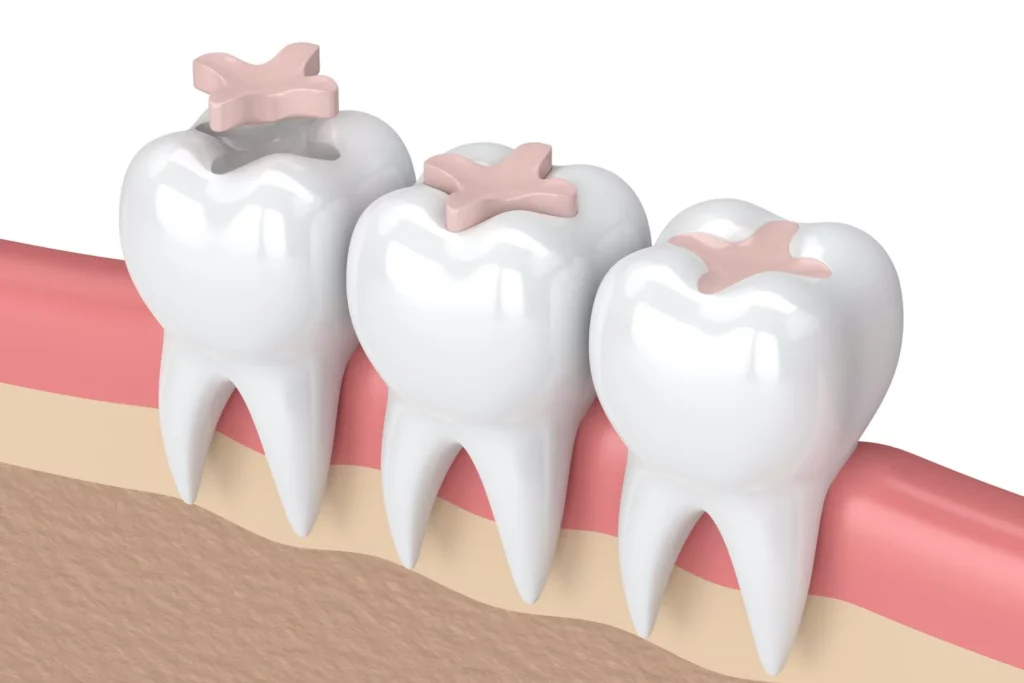
Dentists often recommend inlays when:
- A tooth has moderate decay
- An old filling has failed
- A tooth is cracked or damaged
- The damage is too large for a standard filling
- The tooth does not require a full crown
In dentistry what is an inlay? Simply put, it is a custom restoration that strengthens and repairs a damaged tooth while preserving as much healthy tooth structure as possible.
Understanding Dental Inlays and Onlays
Many patients hear the terms “inlay” and “onlay” together. This raises another common question: what is an inlay and onlay in dentistry?
Although they are similar restorations, there is an important difference.
Dental Inlay
A dental inlay fits inside the grooves of a tooth and does not extend over the tooth’s cusps.
It is used when damage is confined to the center of the chewing surface.
Dental Onlay
A dental onlay covers one or more cusps of the tooth.
It is used when damage is more extensive and involves the outer portions of the tooth.
What Is an Inlay or Onlay in Dentistry?
When dentists refer to an inlay or onlay, they are discussing custom restorations that repair damaged teeth without requiring a full crown.
The main difference is the amount of tooth surface covered:
Also Read: What Is a Flipper in Dentistry? Complete Guide to Flipper Teeth, Benefits, Costs, and Care
- Inlay = inside the cusps
- Onlay = covers one or more cusps
Both options preserve more natural tooth structure than crowns and offer excellent durability.
Why Would You Need a Dental Inlay?
Several dental problems may make an inlay the ideal treatment.
Moderate Tooth Decay
When a cavity is too large for a filling but not severe enough for a crown, an inlay can restore the tooth effectively.
Broken Fillings
Old fillings can wear down, crack, or loosen over time.
Replacing them with an inlay often provides greater strength and longevity.
Cracked Teeth
Small cracks that have not severely weakened the tooth can often be repaired using an inlay.
Tooth Fractures
Minor fractures that affect the chewing surface may be restored successfully with a custom inlay.
Tooth Wear
Years of grinding, clenching, or chewing hard foods can wear down teeth. Inlays help rebuild damaged areas while preserving healthy tooth structure.
Types of Dental Inlays
Dental inlays are available in several materials.
Each material offers unique advantages.
Porcelain Inlays
Porcelain is one of the most popular choices.
Benefits include:
- Natural appearance
- Tooth-colored restoration
- Excellent stain resistance
- Long-lasting durability
Porcelain inlays are often preferred for visible teeth because they blend seamlessly with natural enamel.
Composite Resin Inlays
Composite resin inlays closely match natural tooth color.
Advantages include:
- Affordable option
- Good aesthetics
- Conservative tooth preparation
However, they may not last as long as porcelain or gold restorations.
Gold Inlays
Gold has been used successfully in dentistry for decades.
Benefits include:
- Exceptional durability
- Excellent strength
- Long lifespan
- Minimal wear on opposing teeth
Although highly durable, many patients choose other materials because gold is more noticeable.
Ceramic Inlays
Modern ceramics offer outstanding aesthetics and strength.
They are especially popular among patients seeking a natural-looking restoration.
Benefits of Dental Inlays
Understanding the benefits helps explain why many dentists recommend inlays.
Preserves Natural Tooth Structure
One of the biggest advantages is conservation.
Unlike crowns, which require significant tooth reduction, inlays preserve more healthy tooth material.
Strong and Durable
Inlays are stronger than traditional fillings.
Their custom design allows them to withstand significant chewing forces.
Natural Appearance
Porcelain and ceramic inlays closely mimic natural teeth.
Most people cannot distinguish them from surrounding enamel.
Improved Tooth Strength
The bonding process strengthens weakened teeth and helps prevent further damage.
Long Lifespan
With proper care, dental inlays can last 10 to 30 years or even longer.
Better Fit
Because they are custom-made, inlays fit more precisely than traditional fillings.
This precise fit reduces the risk of future decay around restoration margins.
Dental Inlay Procedure: Step-by-Step
Many patients feel less anxious when they know what to expect.
Initial Examination
Your dentist will:
- Examine your tooth
- Take X-rays if needed
- Assess the extent of damage
- Determine whether an inlay is appropriate
Tooth Preparation
The dentist removes:
- Decay
- Old fillings
- Damaged tooth structure
The area is then cleaned thoroughly.
Dental Impression
An impression or digital scan is taken.
This creates an exact model of your tooth.
Temporary Restoration
In many cases, a temporary filling protects the tooth while the permanent inlay is being created.
Also Read: What Does Dentistry Do? A Complete Guide to Modern Dental Care, Treatments, and Oral Health
Laboratory Fabrication
The inlay is custom-made using:
- Porcelain
- Ceramic
- Composite resin
- Gold
Advanced CAD/CAM technology may allow same-day fabrication in some dental offices.
Placement Appointment
During the second visit:
- The temporary restoration is removed
- The inlay is tested for fit
- Adjustments are made if necessary
- The restoration is permanently bonded
Final Polishing
The dentist polishes the inlay and checks your bite for comfort.
Same-Day Dental Inlays
Technology has changed modern dentistry.
Many practices now offer same-day inlays using CAD/CAM systems.
Advantages include:
- One appointment
- No temporary restoration
- Faster treatment
- Precise digital design
- Immediate results
For busy patients, same-day dentistry provides significant convenience.
How Long Do Dental Inlays Last?
One of the most common questions patients ask is about longevity.
Average lifespan by material:
- Composite resin: 5–10 years
- Porcelain: 10–20 years
- Ceramic: 10–20 years
- Gold: 20–30 years or more
The lifespan depends on:
- Oral hygiene
- Diet
- Teeth grinding habits
- Regular dental checkups
- Material used
Good care significantly extends the life of an inlay.
Dental Inlays vs Fillings
Patients often wonder whether an inlay is better than a filling.
Fillings
Best for:
- Small cavities
- Minor tooth damage
Advantages:
- Lower cost
- Single visit
- Quick procedure
Disadvantages:
- Less durable
- More likely to wear over time
Inlays
Best for:
- Moderate damage
- Larger cavities
Advantages:
- Stronger
- Longer lasting
- Better fit
- More aesthetic
Disadvantages:
- Higher initial cost
- Usually requires multiple steps
Dental Inlays vs Crowns
Another common comparison involves crowns.
Crowns
A crown covers the entire visible portion of the tooth.
Used when:
- Severe damage exists
- Large fractures are present
- Significant structural support is needed
Inlays
An inlay repairs only the damaged area.
Benefits include:
- More conservative treatment
- Greater preservation of healthy tooth structure
- Less invasive procedure
Whenever possible, dentists often prefer preserving natural tooth structure through inlays.
Are Dental Inlays Painful?
Most patients experience minimal discomfort.
The procedure is performed using local anesthesia.
After treatment, you may experience:
- Mild sensitivity
- Slight soreness
- Temporary pressure sensation
These symptoms typically resolve within a few days.
Pain is usually far less than many patients expect.
Recovery After a Dental Inlay
Recovery is generally simple.
Most patients return to normal activities immediately.
Helpful tips include:
- Avoid very hard foods for the first day
- Brush gently around the treated area
- Follow your dentist’s instructions
- Maintain good oral hygiene
Sensitivity to hot and cold foods may occur temporarily but usually disappears quickly.
Cost of Dental Inlays in the United States
Costs vary depending on:
- Geographic location
- Dentist experience
- Material selected
- Insurance coverage
Average cost ranges:
- Composite inlays: $500–$900 per tooth
- Porcelain inlays: $800–$1,500 per tooth
- Gold inlays: $900–$2,500 per tooth
Many dental insurance plans partially cover medically necessary restorations.
Always verify benefits before treatment.
Who Is a Good Candidate for Dental Inlays?
You may be a good candidate if:
- You have moderate tooth decay
- A filling is not sufficient
- Your tooth structure remains mostly intact
- You want a durable restoration
- You prefer a natural-looking solution
Your dentist can determine whether an inlay or another restoration is the best choice.
Potential Risks and Limitations
Although dental inlays are highly successful, no treatment is perfect.
Possible limitations include:
Tooth Sensitivity
Temporary sensitivity can occur after placement.
Higher Cost
Inlays generally cost more than traditional fillings.
Multiple Appointments
Some cases require two visits unless same-day technology is available.
Risk of Damage
Like natural teeth, inlays can crack if exposed to extreme forces.
Despite these limitations, inlays remain one of the most reliable restorative options available.
How to Care for a Dental Inlay
Proper care helps maximize longevity.
Brush Twice Daily
Use fluoride toothpaste and a soft-bristled toothbrush.
Floss Every Day
Remove plaque around restoration margins.
Attend Regular Dental Visits
Routine exams help identify problems early.
Wear a Night Guard
If you grind your teeth, a custom night guard can protect your restoration.
Avoid Extremely Hard Foods
Ice, hard candy, and similar items can damage restorations.
Future Trends in Dental Inlays
Modern dentistry continues to evolve.
Emerging innovations include:
- Advanced digital scanning
- Artificial intelligence-assisted design
- Stronger ceramic materials
- Improved adhesive technology
- Faster same-day restoration systems
These developments are making dental inlays more precise, durable, and accessible than ever before.
Also Read: What Is a Cap in Dentistry? A Complete Guide to Dental Caps, Crowns, Benefits, Costs, and Care
Expert Insight: Why Dentists Often Prefer Inlays
Many people assume a crown is always the best solution for a damaged tooth.
However, modern conservative dentistry focuses on preserving healthy tooth structure whenever possible.
Dental inlays support this philosophy.
Rather than removing large amounts of healthy enamel, dentists can target only the damaged area and restore it precisely.
This approach often leads to:
- Better long-term tooth preservation
- Reduced treatment complexity
- Improved structural integrity
- Greater patient satisfaction
For many cases, an inlay represents the ideal balance between strength and conservation.
Conclusion
If you’ve been asking, what is an inlay in dentistry, the answer is simple: it is a custom-made restoration that repairs damaged teeth while preserving as much natural tooth structure as possible.
Inlays are stronger than traditional fillings, more conservative than crowns, and highly effective for treating moderate tooth damage. Whether you are researching what is an inlay and onlay in dentistry, what is an inlay or onlay in dentistry, or simply trying to understand your treatment options, dental inlays offer an excellent combination of durability, aesthetics, and long-term oral health benefits.
With advances in materials and digital dentistry, dental inlays continue to be one of the most trusted restorative treatments available today.
Frequently Asked Questions (FAQs)
Can a dental inlay be replaced if it becomes damaged?
Yes. If an inlay cracks, loosens, or wears out, your dentist can replace it with a new restoration.
Does a dental inlay look different from a natural tooth?
Modern porcelain and ceramic inlays are designed to closely match your natural tooth color and appearance.
Can children receive dental inlays?
In some cases, yes. Dentists may recommend inlays for children or teenagers when a filling is insufficient and the tooth structure can support the restoration.
Do dental inlays prevent future cavities?
Inlays do not prevent cavities entirely, but they create a tight seal that can reduce the risk of decay when combined with proper oral hygiene.
Can I whiten my teeth after getting an inlay?
Teeth whitening products do not change the color of inlays. If you plan to whiten your teeth, it is often best to do so before receiving a color-matched restoration.
Are dental inlays safe during pregnancy?
Routine dental treatment, including inlays, may be performed during pregnancy when necessary. Always discuss treatment timing with both your dentist and physician.
Can an inlay fall out?
Although uncommon, an inlay can become loose due to wear, trauma, or bonding failure. Contact your dentist immediately if this occurs.
Is an inlay stronger than a large filling?
Yes. In most cases, a properly bonded inlay provides greater strength, durability, and longevity than a large traditional filling.
Can I eat normally after getting a dental inlay?
Yes. Once the restoration is fully bonded and any numbness wears off, you can typically return to your normal diet.
How do dentists decide between an inlay and an onlay?
The decision depends on the amount of tooth damage. If the damage is inside the cusps, an inlay may be used. If one or more cusps need restoration, an onlay is often recommended.