If you have been researching tooth replacement options, you may have come across the term “pontic.” Many patients hear this word from their dentist but do not fully understand what it means. So, what is a pontic in dentistry, and why is it important?
A pontic is an artificial tooth used in a dental bridge to replace a missing natural tooth. It fills the empty space left by a lost tooth and helps restore the appearance, function, and health of the mouth. Pontics play a major role in modern restorative dentistry because they allow patients to smile, speak, and chew normally again.
Understanding what is a pontic in dentistry can help patients make informed decisions about tooth replacement. Whether a tooth is lost due to decay, injury, gum disease, or extraction, a pontic can be an effective solution for restoring a complete smile.
This comprehensive guide explains everything you need to know about pontics, including their purpose, types, materials, benefits, drawbacks, maintenance requirements, and how dentists choose the best option for each patient.
What Is a Pontic in Dentistry?
A pontic is a false tooth that replaces a missing tooth within a dental bridge. The word “pontic” comes from the Latin word “pons,” which means bridge.
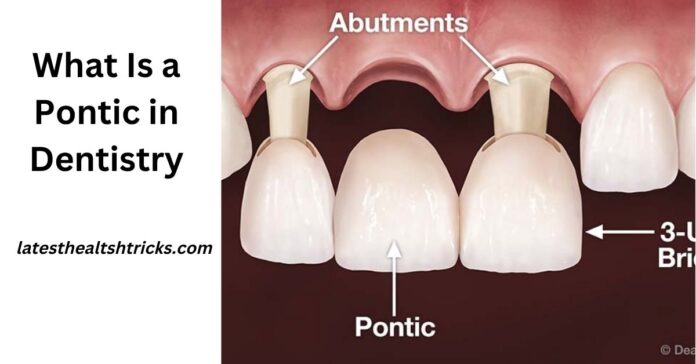
In dentistry, a bridge consists of three main parts:
- Abutment teeth
- Dental crowns attached to abutment teeth
- Pontic (the replacement tooth)
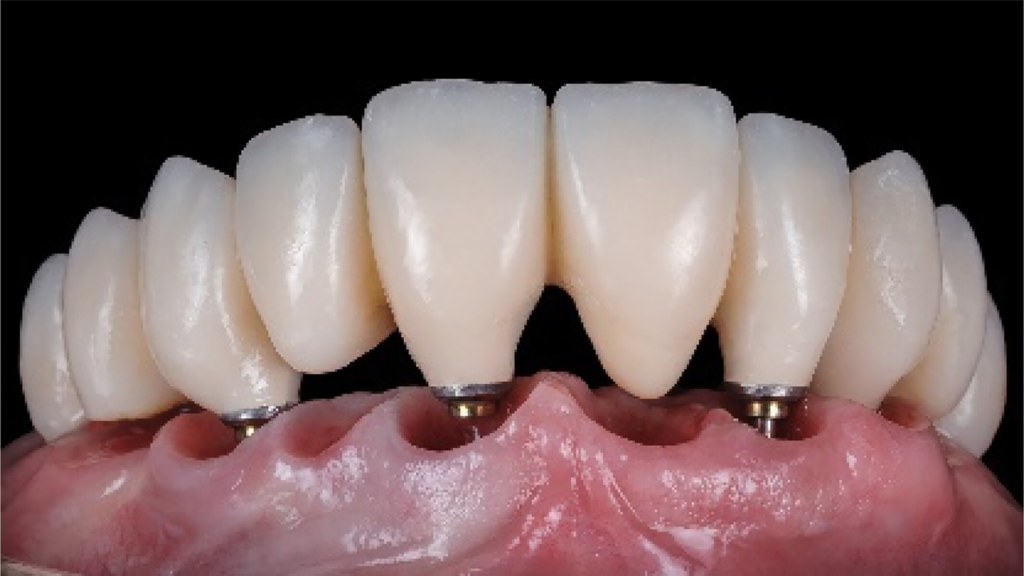
The pontic is positioned between supporting teeth or dental implants. It literally bridges the gap created by a missing tooth.
When discussing what is a pontic in dentistry, it is important to understand that the pontic itself does not have a root. Instead, it is supported by neighboring teeth or implants that hold it securely in place.
The main purpose of a pontic is to restore:
- Appearance
- Chewing ability
- Speech
- Bite alignment
- Overall oral health
Without a pontic or another tooth replacement option, neighboring teeth can shift into the empty space, causing bite problems and other complications.
Why Are Pontics Important?
Many people assume a missing tooth is only a cosmetic issue. In reality, missing teeth can lead to serious dental problems.
A pontic helps prevent:
Tooth Shifting
When a tooth is lost, nearby teeth often drift toward the empty space. This movement can create alignment issues and bite problems.
Bone Loss
Although a pontic cannot completely prevent bone loss like a dental implant can, it helps maintain oral function and appearance.
Difficulty Chewing
Missing teeth make it harder to chew certain foods. A pontic restores chewing efficiency.
Speech Problems
Some missing teeth affect pronunciation. Replacing them with a pontic improves speech clarity.
Also Read: Is Dentistry Healthcare? A Complete Guide to Understanding Dentistry’s Role in Modern Healthcare
Facial Changes
Tooth loss can affect facial structure and create a sunken appearance over time.
Because of these benefits, understanding what is a pontic in dentistry is important for anyone considering restorative dental treatment.
How Does a Pontic Work?
A pontic works by filling the space left by a missing tooth.
The replacement tooth is attached to:
- Crowns on adjacent teeth
- Dental implants
- A combination of teeth and implants
The pontic sits above the gums and is carefully shaped to resemble a natural tooth.
Modern pontics are designed to:
- Look realistic
- Feel comfortable
- Function like natural teeth
- Blend with surrounding teeth
The dentist customizes the shape, size, and color to match the patient’s smile.
Components of a Dental Bridge
To better understand what is a pontic in dentistry, it helps to know the parts of a dental bridge.
Abutments
Abutments are the supporting structures that hold the bridge.
These may be:
- Natural teeth
- Dental implants
Crowns
Crowns cover the abutment teeth and provide support for the bridge.
Pontic
The pontic is the artificial replacement tooth positioned between the supporting structures.
Together, these components form a complete dental bridge.
Different Types of Pontics
Dentists use several types of pontics depending on the patient’s needs.
Traditional Pontic
The traditional pontic is the most common option.
Characteristics include:
- Natural appearance
- Good function
- Comfortable fit
It lightly contacts the gum tissue while maintaining proper hygiene access.
Ovate Pontic
The ovate pontic is considered one of the most esthetic options.
Features include:
- Natural-looking emergence from gums
- Excellent cosmetic results
- Popular for front teeth replacement
The pontic sits in a small depression within the gum tissue to mimic a natural tooth.
Modified Ridge Lap Pontic
This design combines appearance with easier cleaning.
Benefits include:
- Natural look from the front
- Easier oral hygiene
- Reduced plaque accumulation
Many dentists prefer this design because it balances aesthetics and maintenance.
Conical Pontic
The conical pontic has a rounded shape.
Common uses include:
- Posterior teeth
- Areas with thin ridges
- Lower chewing surfaces
It is relatively easy to clean.
Hygienic Pontic
Also known as a sanitary pontic, this design does not touch the gum tissue.
This leads us to an important related keyword.
What Is a Sanitary Pontic in Dentistry?
One of the most frequently asked questions is: what is a sanitary pontic in dentistry?
A sanitary pontic, also called a hygienic pontic, is a pontic design that does not contact the gum tissue at all.
Instead, a small space exists between the pontic and the gum.
Advantages include:
- Easier cleaning
- Better hygiene
- Reduced plaque accumulation
- Lower risk of gum irritation
Because appearance is less important in the back of the mouth, sanitary pontics are usually used for:
- Molars
- Premolars
- Non-visible areas
They are rarely used for front teeth because the gap may affect aesthetics.
Materials Used for Pontics
Modern pontics can be made from several materials.
Porcelain
Porcelain is one of the most popular choices.
Benefits include:
- Natural appearance
- Tooth-colored finish
- Stain resistance
Zirconia
Zirconia has become increasingly popular.
Advantages include:
- Exceptional strength
- Natural appearance
- Durability
- Biocompatibility
Metal-Ceramic
These pontics combine:
- Strong metal framework
- Porcelain exterior
This combination provides both strength and aesthetics.
Gold Alloys
Gold-based pontics are less common today but remain highly durable.
Advantages include:
- Long lifespan
- Excellent strength
- Reduced wear
Resin Materials
Resin pontics are often used for temporary restorations.
Benefits include:
- Lower cost
- Quick fabrication
- Easy modification
Who Needs a Pontic?
A dentist may recommend a pontic for individuals who have:
- One missing tooth
- Multiple missing teeth
- Lost teeth from trauma
- Severe tooth decay
- Gum disease-related tooth loss
- Congenitally missing teeth
Pontics are suitable for patients seeking a fixed, non-removable tooth replacement option.
Pontic vs Dental Implant
Many patients compare pontics and implants.
Pontic Advantages
- Lower initial cost
- Faster treatment
- No surgery required in many cases
- Effective restoration
Implant Advantages
- Preserves bone better
- Independent support
- Longer-term solution
- No impact on neighboring teeth
The best choice depends on the patient’s oral health, budget, and treatment goals.
Pontic vs Denture
Pontics and dentures serve similar purposes but differ significantly.
Pontics
- Fixed in place
- Greater stability
- More natural feel
- Better chewing function
Dentures
- Removable
- Less expensive initially
- Suitable for extensive tooth loss
Many patients prefer pontics because they feel more like natural teeth.
Advantages of Pontics
Pontics offer numerous benefits.
Restored Appearance
A pontic fills the gap and improves smile aesthetics.
Improved Chewing
Patients can eat more comfortably.
Better Speech
Proper tooth replacement improves pronunciation.
Enhanced Confidence
Many patients feel more comfortable smiling and speaking.
Stable Bite
Pontics help maintain proper tooth alignment.
Long-Term Function
With proper care, pontics can last many years.
Potential Disadvantages
Although effective, pontics have limitations.
Bone Loss Continues
Pontics do not replace tooth roots.
Requires Maintenance
Special cleaning techniques are necessary.
Dependence on Support Teeth
Traditional bridges rely on healthy neighboring teeth.
Possible Replacement
Over time, repairs or replacement may be needed.
How Dentists Choose the Right Pontic
Several factors influence pontic selection.
Location of Missing Tooth
Front teeth prioritize aesthetics.
Back teeth prioritize strength and hygiene.
Gum Condition
Healthy gums support more esthetic pontic designs.
Bone Structure
Ridge shape affects pontic design.
Patient Preferences
Some patients prioritize appearance, while others prioritize ease of cleaning.
Budget
Material selection often depends on cost considerations.
The Pontic Placement Process
The treatment process typically includes:
Initial Examination
The dentist evaluates:
- Oral health
- Gum condition
- Bite alignment
Treatment Planning
The most suitable bridge design is selected.
Tooth Preparation
Abutment teeth may be prepared if necessary.
Impressions
Digital or traditional impressions are taken.
Temporary Bridge
A temporary restoration may be provided.
Final Placement
The custom bridge and pontic are securely placed.
How Long Does a Pontic Last?
The lifespan of a pontic varies.
Average longevity ranges from:
- 5 to 15 years
- Sometimes 20 years or longer
Factors affecting lifespan include:
- Oral hygiene
- Material quality
- Bite forces
- Smoking habits
- Regular dental visits
Proper care significantly extends durability.
How to Clean Around a Pontic
Cleaning is essential for long-term success.
Recommended methods include:
Daily Brushing
Brush twice daily using a soft-bristled toothbrush.
Floss Threaders
These help clean beneath the pontic.
Water Flossers
Water flossers remove debris under the bridge.
Interdental Brushes
Useful for cleaning hard-to-reach areas.
Professional Cleanings
Visit your dentist regularly for maintenance.
Common Problems with Pontics
Potential issues include:
Food Trapping
Food particles may collect beneath the pontic.
Gum Irritation
Improper cleaning can cause inflammation.
Bridge Loosening
Cement failure may occur over time.
Chipping
Porcelain surfaces can occasionally chip.
Decay Around Abutments
Supporting teeth remain vulnerable to cavities.
Regular dental care minimizes these risks.
Innovations in Modern Pontic Design
Advances in dental technology continue to improve pontics.
Recent developments include:
- Digital smile design
- CAD/CAM manufacturing
- High-strength zirconia
- 3D scanning
- Improved biocompatible materials
These innovations provide more precise, comfortable, and natural-looking restorations.
Expert Insights on Pontics
Many patients focus only on replacing a missing tooth. However, successful treatment requires considering long-term oral health.
The most effective pontic is not necessarily the most expensive. Instead, it is the one that balances:
- Function
- Appearance
- Comfort
- Hygiene
- Durability
Modern dentistry increasingly emphasizes designs that are both aesthetic and easy to clean. This approach helps reduce complications while improving patient satisfaction.
Patients should work closely with experienced dental professionals to select the most appropriate pontic design for their unique situation.
Conclusion
Understanding what is a pontic in dentistry helps patients make informed decisions about tooth replacement. A pontic is an artificial tooth used in a dental bridge to replace a missing natural tooth and restore function, appearance, and oral health.
Pontics are available in several designs, including traditional, ovate, conical, modified ridge lap, and sanitary pontics. Each design serves a specific purpose depending on the location of the missing tooth and the patient’s needs.
For those wondering what is a sanitary pontic in dentistry, it is a hygienic pontic design that remains elevated above the gum tissue to improve cleaning and reduce plaque accumulation.
With modern materials such as porcelain and zirconia, today’s pontics look more natural and perform better than ever before. Proper care, good oral hygiene, and regular dental visits can help ensure a pontic remains functional and attractive for many years.
Whether replacing a single tooth or multiple teeth, a well-designed pontic remains one of the most reliable and effective solutions in restorative dentistry.
FAQs About What Is a Pontic in Dentistry
Is a pontic considered a fake tooth?
Yes. A pontic is an artificial replacement tooth that fills the gap left by a missing natural tooth.
Can a pontic replace more than one tooth?
Yes. A dental bridge can contain multiple pontics when several teeth are missing.
Does a pontic have a root?
No. A pontic does not have a root. It is supported by neighboring teeth or dental implants.
Can food get stuck under a pontic?
Yes. Food debris can sometimes collect underneath, which is why proper cleaning is important.
Is a pontic permanent?
Pontics are designed for long-term use but may eventually require repair or replacement.
Are pontics comfortable?
Most patients find pontics very comfortable after a short adjustment period.
Can a pontic match natural teeth?
Yes. Modern materials and custom fabrication allow pontics to closely resemble natural teeth.
What happens if a pontic breaks?
A broken pontic should be evaluated by a dentist as soon as possible. Repair or replacement may be necessary.
Are pontics safe for older adults?
Yes. Pontics are commonly used in older adults and can be an excellent solution for tooth replacement.
Can children receive pontics?
In some situations, temporary pontics may be used for younger patients until permanent treatment becomes appropriate.