Your skin care routine likely includes cleansers, serums, moisturizers, toners, masks, sunscreens, and more. But have you ever stopped to think about how to store skin care products the right way? Proper storage may seem simple, but it directly impacts how well your products work, how long they last, and even your skin’s health. Improper storage can cause ingredients to break down, reduce effectiveness, and sometimes lead to irritation or infection. This comprehensive, easy‑to‑read guide will walk you through everything you need to know about how to store skin care products so they stay safe, potent, and ready to deliver results.
Whether you’re a beginner or a seasoned skin care lover, this guide shares clear steps, professional insights, and practical tips. By the end, you’ll understand how to organize your products for best performance and why storage matters more than most people realize.
The Importance of Knowing how to store skin care products
Your favorite face cream or serum contains active ingredients like vitamin C, retinol, hyaluronic acid, peptides, or botanicals. These ingredients are powerful but delicate. Air, heat, light, and even humidity can degrade them, causing them to lose strength or change chemical structure. This means a product may not do what it claims, or worse, it could irritate your skin.
Learning how to store skin care products properly helps:
- Maintain product stability and performance
- Extend shelf life and reduce waste
- Protect sensitive ingredients from degradation
- Prevent contamination and bacterial growth
When you store products correctly, you get the most value and results from what you invest in — and that’s a win for both your skin and your wallet.
How to Read Skin Care Product Packaging: What to Look For
Before deciding where to store a product, learn what its packaging tells you. Manufacturers often put important storage instructions on labels or boxes.
Expiration Date vs. PAO (Period After Opening)
Some products list a clear expiration date — this tells you how long the formula remains safe unopened. Others use a PAO symbol (an open jar icon with a number such as 6M, 12M, or 24M). This means:
- 6M = Use within 6 months of opening
- 12M = Use within 12 months of opening
- 24M = Use within 24 months of opening
Always note when you open a product. You can use a small label or marker to write the date on the bottle or jar.
Storage Instructions on Labels
Occasionally, products will say things like “store in a cool, dry place” or “protect from light.” These directions are not marketing fluff — they are there because the ingredients are sensitive. Pay attention.
Basic Rules for How to Store Skin Care Products
Understanding general storage principles makes all the difference. Here are the foundational rules that apply regardless of product type:
Keep Products Away From Heat
Heat accelerates chemical breakdown. High temperatures can make active ingredients unstable. Avoid:
- Storing products on windowsills
- Keeping them near radiators or heaters
- Leaving them in hot bathrooms (especially near showers)
A cool, consistent room temperature — similar to what you’d want for humans — is ideal.
Avoid Direct Sunlight
Sunlight causes oxidation, which can make ingredients like vitamin C and retinol ineffective. Avoid storing skincare where it receives direct sun, even through a window.
Protect from Humidity
While your bathroom may seem convenient, humidity from showers and baths can introduce moisture into jars and bottles, which encourages bacterial growth and formula changes. Dry, stable environments are better.
Keep Air Exposure Minimal
Air (oxygen) can degrade ingredients over time. Products in tubes, air‑less pumps, or dark glass bottles are designed to limit air contact for this reason. Avoid leaving lids off or transferring products to open containers.
Tidy Organization Improves Longevity
Organizing your skincare routine not only makes it easier to find items — it also prevents contamination. Crowded shelves make accidental spills or exposures more likely.
Best Places to Store Your Skin Care Products
Different products may benefit from slightly different storage environments. Here’s how to decide where each category belongs.
Bedroom Vanity or Dresser
This is the most common and generally best place for many products, as long as the area is:
- Clean
- Cool
- Out of direct sunlight
Good candidates for bedroom storage include:
Also Read: Dubolsinho: Meaning, Origins, Cultural Impact, and Why It Matters Today
- Moisturizers
- Cleansers
- Serums without heat‑sensitive ingredients
- Oils
- Toners
This location prevents exposure to humidity and heat that often occur in bathrooms.
Cool Closets or Drawers
Closets or dressers away from heat and moisture are excellent for storing products that are sensitive to both temperature and humidity. If you have a dedicated skincare drawer, use it!
Refrigerators (When Appropriate)
Some products benefit from refrigeration, especially those with natural or organic formulas, probiotics, or certain vitamin C serums. Cold slows chemical reactions and can help preserve potency.
Products that may benefit from refrigeration:
- Natural or preservative‑free products
- Vitamin C serums (especially L‑ascorbic acid)
- Eye creams
- Sheet masks
- Gel‑based products like aloe vera
Keep skincare separate from food items. Having a small, dedicated skincare fridge helps ensure cleanliness.
Avoid Bathroom Cabinets
Despite how common it is, storing skincare in the bathroom is often not ideal. Hot showers and steam increase humidity, which can compromise product integrity.
If you must keep items in the bathroom, store only those that are least affected by moisture:
- Cleansers
- Non‑active lotions
- Sunscreen (sealed, with a protective cover)
How to Store Specific Types of Skin Care Products
Different products require different care. Below is a breakdown of common skincare categories and how to optimize storage for each.
Cleansers
Cleansers are generally stable, but proper storage still matters.
Best Practices:
- Keep caps tightly closed to prevent bacterial contamination.
- Store at room temperature away from heat and sunlight.
- Avoid storing in steamy bathroom areas if possible.
Toners
Toners with alcohol are fairly stable, but alcohol‑free toners may be more sensitive.
Best Practices:
- Keep in a cool, dry place.
- Some botanical or hydrating toners can benefit from fridge storage.
- Always close the cap after use to prevent evaporation or contamination.
Serums
Serums contain concentrated active ingredients. They are often the most sensitive and require the most careful storage.
Key Ingredients and Storage Tips:
- Vitamin C (especially L‑ascorbic acid): Light and heat sensitive; store upright in dark place or fridge.
- Retinol: Sensitive to light and temperature; store dark and cool.
- Hyaluronic acid: More stable, but still avoid humidity.
- Peptides: Best kept cool and dry.
General Tips:
- Use air‑less pump bottles when possible.
- Write the date when opened.
- Avoid storing near heat or sunlight.
Moisturizers and Creams
Moisturizers vary greatly by formula. Rich creams with oils are generally stable but can separate if overheated.
Best Practices:
- Store at room temperature away from humidity.
- Jars should be closed tightly after use.
- Use clean hands or spatula tools to avoid contamination.
Eye Creams
Eye area skin is delicate, and the formulas often contain sensitive ingredients.
Best Practices:
- Store in a cool, dry place.
- Refrigeration can feel soothing and help reduce puffiness.
- Always close the cap tightly.
Sunscreen
Sunscreen is one product where performance degradation can directly impact your skin’s protection. How to store sunscreen properly is essential.
Best Practices:
- Store sunscreen away from direct sunlight and heat.
- Avoid leaving it in hot cars.
- Note the expiration date — sunscreen can lose efficacy after expiration.
Masks and Exfoliants
Masks and exfoliating products often contain acids (like AHAs and BHAs) or exfoliating particles.
Best Practices:
- Close containers tightly.
- Store at room temperature or cool space.
- Avoid humid areas.
Oils and Natural Products
Natural oils and botanical products oxidize faster because they often have fewer preservatives.
Best Practices:
- Store oils in dark glass bottles.
- Keep them in cool, dry places or fridge.
- Avoid light exposure.
Signs Your Skin Care Products Have Gone Bad
Even with proper storage, products eventually expire or break down. Watch for these clues:
Also Read: Decobry: A Modern Approach to Creative Home Design and Functional Living
1. Change in Smell
A sour, strange, or “off” smell often means ingredients have oxidized or degraded.
2. Change in Texture or Color
If a cream separates, becomes grainy, thickens, or changes color, it may be unstable.
3. Irritation or Unexpected Results
If a product suddenly stings, burns, or causes redness, stop using it — it may be compromised.
4. Mold or Growth
This is rare but serious — discard immediately if spotted.
Professional Insights: Why Proper Storage Matters
Cosmetic chemists design formulas to perform under ideal conditions. Because active ingredients can break down quickly when exposed to oxygen, light, and heat, storing products incorrectly can render them less effective or unstable.
For example:
- Vitamin C oxidizes rapidly in light and heat, turning brown and losing effectiveness.
- Retinol breaks down in oxygen and is unstable in transparent packaging.
Proper storage protects not just your investment but also your skin’s health.
How to Build a Skincare Storage System That Works
A simple system makes it easier to store products well and keep your routine organized.
Step 1: Clean and Clear a Space
Choose a shelf, drawer, or small cabinet in a cool, dry area. Dust and wipe it before use.
Step 2: Categorize Products
Group items by type:
- Cleansers
- Toners
- Serums
- Moisturizers
- Sunscreens
This will help you find what you need quickly and avoid unused products.
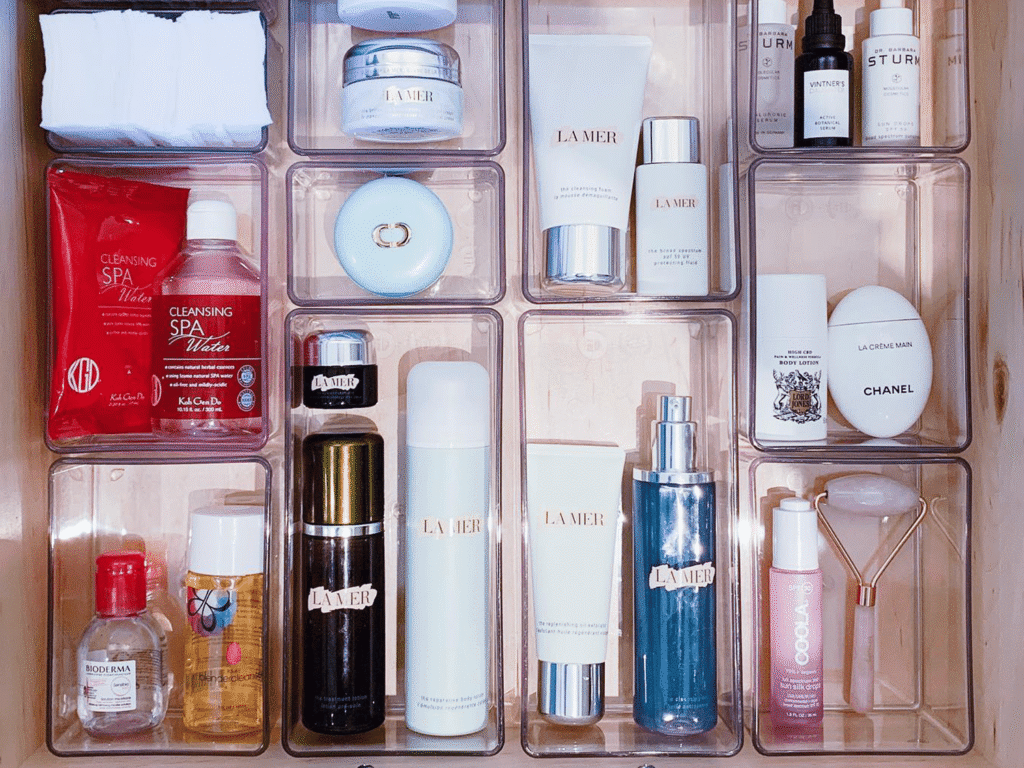
Step 3: Use Organizers
Use containers or drawer dividers to keep similar items together. Transparent bins help you see what you have.
Step 4: Label Opening Dates
Write the date you open each product. This gives you a visual reminder of how long you’ve had it.
Step 5: Implement Rotation
Use older products first. This reduces waste and helps you stay within expiration times.
Mistakes to Avoid When Storing Skin Care Products
Even small habits can reduce product effectiveness. Avoid:
- Leaving lids off or loosely closed
- Storing in hot or steamy areas
- Using products past their PAO or expiration date
- Sharing products (this may spread bacteria)
Travel Tips: how to store skin care products on the go
Travel challenges storage with changing temperatures and jostling. Here’s what you can do:
- Use sturdy, leak‑proof travel bottles
- Keep products in insulated toiletry kits
- Avoid leaving skincare in hot cars or suitcases for long periods
- Pack sunscreens and heat‑sensitive products in cooler sections or separate pouch
- Also Read: Styleinventure com: A Complete Guide to Digital Style, Trends, and Creative Expression
Frequently Asked Questions (FAQs)
Can I store my skin care products in the bathroom?
Ideally, no. Bathrooms tend to be warm and humid, which can reduce product stability over time. A cool, dry, and shaded area is better.
Should I refrigerate all my skin care products?
Not all products need refrigeration. Refrigeration is especially helpful for natural, preservative‑free products, vitamin C serums, and eye creams, but most moisturizers and cleansers do fine at room temperature.
How long does skin care last once opened?
Check the PAO symbol (such as 6M, 12M). That tells you how many months it should be used after opening. Always note the opening date.
Can heat spoil sunscreen?
Yes. Heat can lessen the effectiveness of sunscreen. Avoid leaving tubes or bottles in hot cars or direct sun.
Is it okay to share skincare products with others?
It’s best not to, as this can spread bacteria and compromise product safety.
My product turned slightly grainy — is it still safe?
Changes in texture may indicate ingredient separation or breakdown. It’s safest to discontinue use.
Do air‑less pump bottles really help preserve products?
Yes. Air‑less packaging limits oxygen exposure, which helps keep sensitive ingredients stable longer.
How do I know when a product is no longer good?
Look for changes in smell, texture, color, or performance. If it doesn’t feel right, it’s better to replace it.
Can humidity really affect serums?
Yes. Humidity can introduce moisture into bottles and jars, encouraging bacterial growth and ingredient degradation.
What’s the safest place in my home to store products?
A cool, stable space like your bedroom closet or dresser drawer is often best.
Conclusion
Learning how to store skin care products properly may seem like a small detail, but it is one of the most important steps in protecting your skin, maximizing product performance, and getting the most value from your skincare investment.
By following the guidelines in this guide — such as storing products in cool, dry places; protecting sensitive formulas from light and air; reading labels; and monitoring expiration dates — you’ll ensure your products stay effective longer and continue to support your skin’s health.
Whether you’re reorganizing your vanity, planning travel, or reviewing your routine, these tips will help you store every product the right way. You now have the knowledge and confidence to take your skincare routine to a new level of care and longevity.